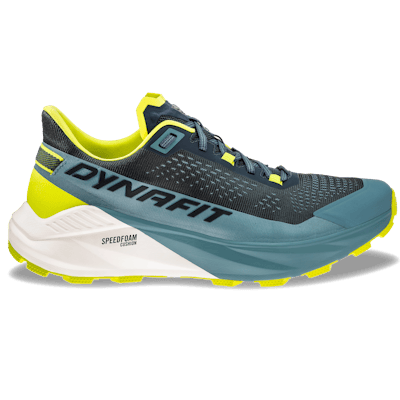
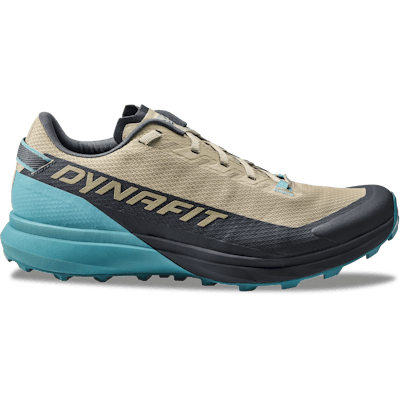
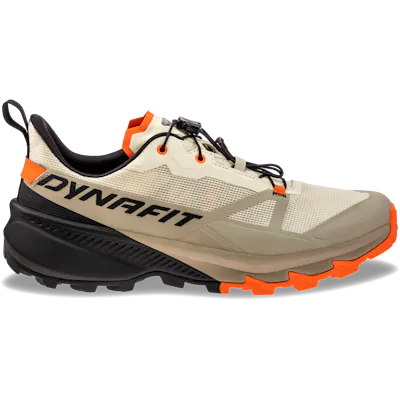
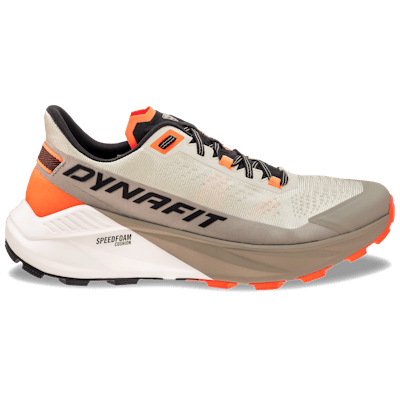
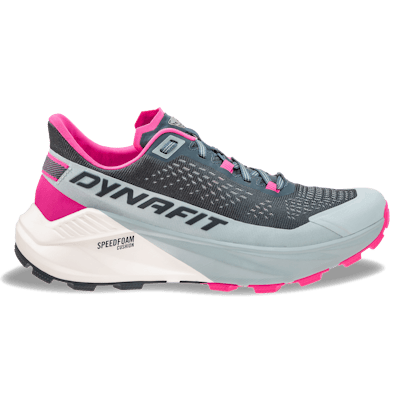
DYNAFIT mountaineering shoes are specifically designed for use in the mountains and technical terrain. Like approach shoes or hiking boots, they provide significantly more stability, grip, and protection than trail running shoes. Compared to the heavy, bulky leather mountain boots of the past, all DYNAFIT mountaineering models are rigorously trimmed for low weight and dynamism for more speed and efficiency in the mountains.
With the three product lines Traverse, Transalper, and Elevation, we offer the perfect mountain shoe for every alpine adventure – from a quick after-work summit push to multi-day hut-to-hut tours and technically demanding high-altitude ice climbs. But how exactly do the models differ? Which shoe is right for which terrain? And what’s the difference compared to trail running shoes? Our guide sheds some light on this.
Mountaineering shoes vs. trail running shoes
Even though the mountaineering models look a lot like trail running shoes, there are some key functional differences in alpine terrain.
- Stability & chassis: Mountaineering shoes have a much stiffer frame structure (known as the chassis). This is essential to prevent twisting an ankle on rocky ground and to stand stable on small rock edges.
- Robust upper material: Here, we use extremely abrasion-resistant fabrics and high rock protection edges that can withstand sharp rock contact for a long time and protect your foot.
- Sole & cushioning: While trail running shoes focus on maximum cushioning and responsiveness (energy return) for running, a mountaineering midsole is all about lasting comfort for long days and a secure fit for your foot.
The common factor: Top-notch grip. Both running shoes and mountain shoes rely on high-quality rubber compounds like Pomoca or Vibram and a sophisticated lug design for maximum traction.

The DYNAFIT product lines compared
- DYNAFIT Traverse – For easy mountain hikes
- The Traverse line blurs the boundaries between trail running and mountaineering, and is the perfect entry point into the world of mountaineering.
- Area of use: Quick after-work runs on a nearby mountain, extended hikes in a low mountain range or sporty speed hiking with a light load.
- The terrain: Paved hiking trails and easy climbs. As soon as the walk becomes high alpine, pathless, or involves more climbing, the Traverse line reaches its limits.
- Your advantage: An extremely lightweight, dynamic, and versatile all-rounder for quick performance in straightforward terrain.

- DYNAFIT Transalper – All-rounder for classic alpine mountain hikes
- With the Transalper line, you’re ideally equipped for just about any challenge in the mountains.
- Area of use: Multi-day hut-to-hut hikes, demanding alpine trails involving contact with rocks, or exposed summit crossings with some easy climbing.
- The terrain: Technical climb, loose debris, steep, rough mountain slopes, or boulder fields.
- Your advantage: Maximum robustness, a high level of protection, and perfect control in alpine terrain, without sacrificing comfort.

- DYNAFIT Elevation – For high trails and glaciers
- The most technical and uncompromising shoes in the entire DYNAFIT range. Developed for the most extreme conditions in the mountains.
- Area of use: Classic high trails, easy climbing on rock and ice, as well as mountaineering at high altitudes.
- The terrain: Snowfields, glaciers, ice slopes, and high alpine, rugged rocky terrain.
- Your advantage: The Elevation shoes are partly crampon-compatible (combi-crampons) and, thanks to an integrated gaiter, completely waterproof. Despite maximum protection and uncompromising stability, the Elevation line remains lightweight and dynamic.
### Conclusion: Follow your rhythm in any terrain
From a quick sprint to the summit to a long, challenging day in the mountains: Choosing the right mountaineering shoe determines how efficiently and safely you move in the mountains. While the Traverse range embodies lightness and flexibility, the Transalper line gives you protection and stability in classic alpine terrain. By contrast, the Elevation series is your partner for high alpine conditions on ice and rock. <br>
All models share the DYNAFIT DNA: A focus on speed, minimal weight, and maximum efficiency, so you can make the most of your day in the mountains.
Area of use | Terrain/conditions | Recommended model | Why? |
Easy mountain walks, speed hiking, walks | Easy terrain, trails, paved paths | Traverse 2 | Lightweight, flexible, versatile; noticeably more protection and stability than a regular running shoe |
Easy mountain walks, speed hiking, walks in rain/wet conditions | Simple terrain, trails, paved paths, wet ground | Traverse 2 GTX | Lightweight, flexible, versatile; noticeably more protection and stability than a regular running shoe; Permanently waterproof thanks to the GORE-TEX membrane |
Classic mountain walks including some easy climbing | Uneven terrain, stone and rock, technical | Transalper 2 Low | Control, protection, and great edge stability on rocky ground |
Classic mountain walks including some easy climbing in changeable weather | Uneven terrain, stone and rock, technical, wet ground | Transalper 2 Low GTX | Control, protection, and great edge stability on rocky ground, absolutely waterproof thanks to the GORE-TEX membrane |
Challenging mountain walks involving contact with rock and easy climbing in any weather | Debris, boulder fields, easy climbing sections, exposed climbs | Transalper Mid GTX | Ankle-high protection against twisting and debris, more stability, waterproof thanks to GORE-TEX |
High altitudes, (high) alpine tours, glaciers | Technically very demanding terrain, rock, ice, and snow | Elevation WP | Maximum protection, partly crampon-compatible, completely waterproof with weather protection gaiters with minimal weight. |