Summer presents a special challenge for runners: Heat. When temperatures rise above 30 degrees, the body often sends a clear stop signal. But how do you cope with this strain? How do you prepare sensibly without overloading the body? And what gadgets can help with this?
We asked one of the best: Ultra runner Hannes Namberger. The DYNAFIT athlete explains how he deals with high temperatures, what really matters, and why extreme heat training is only for pros.
Coping with heat: Hot or not?
Hannes, some runners love the biting cold, while others only really hit their peak when it’s hot and sunny. How about you?
To be honest, I’m not really a fan of extreme cold or intense heat. But I don’t really have any big problems with them either. I can’t change the weather – so I try to adapt to it as best as I can and not waste time worrying about something I can’t control.
What actually happens in the body and mind when it gets really hot?
In extreme heat, the body mainly works on regulating its own temperature. That takes up lots of energy, meaning that little power actually gets through to “the shoes.” As soon as the core body temperature rises, it gets uncomfortable. Anything over 38.5 degrees feels extreme, almost like a fever. Running intensely in this state is very demanding both mentally and physically.


Western States: The ultimate heat school
In 2025, you took part in the legendary Western States Endurance Run – one of the hottest races in the world. What makes this race so special?
It’s not just hot there. It’s brutal. It feels like someone is constantly blowing a hairdryer in your face while you’re running. I’d never experienced anything like it before.
How did you deal with it?
I made a few tactical errors beforehand that ended up costing me a lot of energy later. When the heat reached its peak, my body really struggled. I could only run very slowly, and was even reduced to walking at times.
For parts of the race, I had ice all over my upper body just to cope with the heat. In combination with ice-cold drinks, it was just about tolerable.
What do you take away from a race like that?
Those experiences teach you a huge amount. You get a much better understanding of how your body reacts to heat and what you need to do differently next time. Can I pace myself better in the race? Can I look after myself even better? Do I maybe need to ease off earlier so that I have more in the tank for the critical part of the race?
Preparation and targeted heat training
How do you prepare for hot races like the Western States?
I try to acclimatize my body specifically to the conditions. If a competition is held at temperatures above 30 degrees, I should have already experienced these temperatures in training.
What experiences have you had with targeted heat training?
On the pro scene, it’s all about squeezing out that last bit of performance. Heat training helps you deal better with high temperatures. On the flip side, it can have similar effects to altitude training. Real heat training is a balancing act, and is only worthwhile if you’ve already optimized a bunch of other training factors.
Before the Western States, I did heat training about four or five times a week, mostly on the indoor bike. It was always the second workout of the day, and I only did it when I was properly healthy.
What does “real” heat training actually mean?
You train in controlled conditions and deliberately expose your body to really high temperatures. The most important tool in heat training is the core sensor, which continuously measures and monitors your body temperature. Sometimes, you wear thermal underwear or extra layers like a hat or a down jacket to deliberately increase the strain.
Is this kind of heat training useful for regular runners?
Absolutely not. Heat training is a huge strain on the body and should only be done under guidance and supervision. It’s not for regular hobby runners. No one should be walking around in a down jacket and thick mittens at 35 degrees. That’s just inviting a collapse, which doesn’t really help at all. I’d even go as far as to say that heat training is hardly practical for working folks. After a session like that, you often feel mentally drained and empty. After all, you’re deliberately putting your body under intense strain. By contrast, sauna sessions are a great way for anyone to slowly get their body used to the heat.


Equipment, snacks and cooling
What are the basics to keep in mind when running in the heat?
Liquids, electrolytes, and carbs. If that isn’t right, things can get dicey pretty quickly.
Do you have any other strategies or gadgets that really help you out?
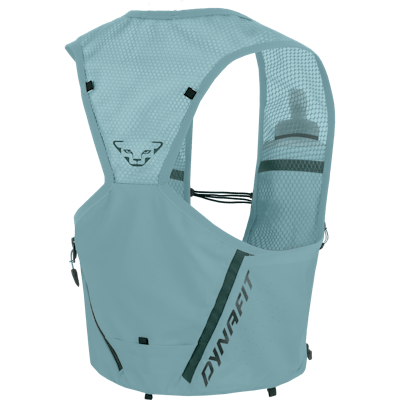
Basically, anything that cools you down: Light, bright clothes, a cap or hat, a wet cloth on your neck. In extreme races like the Western States, we also use ice on our body or ice-cold drinks to keep our body temperature in check.
Hannes’ tips for summer running
What’s your best advice for all runners?
Heat training is just as vital as interval training. But do just the right amount.
What’s important is that you know your own strategy: What do I wear? How much do I drink? How do I react when it gets too much? And above all: Don’t do any experiments in extreme conditions.
Can you sum up your heat-running mindset for us in three bullet points again?
- It’s not fun.
- It feels gross.
- But those who are prepared can handle it.
About Hannes Namberger
Hannes Namberger, born in Ruhpolding in 1989, is one of the most successful German trail runners and ranks among the international elite in ultra running. After his career in alpine ski racing, he eventually took up trail running, going on to impress with his extraordinary endurance and mental strength. His biggest successes include wins at the Lavaredo Ultra Trail and the Eiger Ultra Trail, as well as a strong 4th place at the UTMB over 172 km.